The August of 1914 was one of the hottest in living memory in Western Europe. Beaches on both sides of the Channel were packed with holidaymakers enjoying the warm summer sun. True, there were rumours of friction in the Balkans – an Austrian Archduke had been assassinated. But surely, that would come to nothing. The diplomats would sort things out, as they had always done.
Sadly, on that occasion, they did not. Within weeks, Europe was consumed by conflict : By Christmas, one and a half million men and women were already dead. By end 1918, this figure would rise to over 20 million.
Such is the price of complacency, the fragile illusion that peace can never be broken.
The August of 2026 was also one of the hottest in living memory. Our summers still bring families to Europe’s coasts to enjoy a well-earned break. True, there have been growing reports about drone incursions, cyberattacks and the dangers of AI. Just a way to fill newspapers? Doubtless the politicians will sort it all out. After all, we have had peace for over 70 years. Why should that change now?
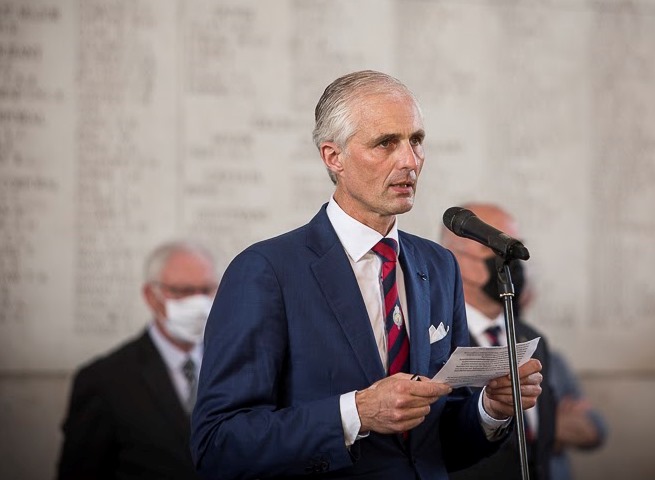
This sounds ominously like the summer of 1914. If we ever doubt the potential price of taking our freedom for granted, we need only look around us. We need only look at the names that line these walls. Each inscription represents a life cut short, a family shattered, and a sacrifice made. We cannot afford to let history repeat itself. And we must do everything humanly possible to prevent it. But how?
The obvious way to persuade any reasonable person is to underline the terrible cost of war and the benefits that peace brings, a message that we repeat here every day during the Last Post Ceremony.
Sadly, the people who threaten our freedoms are not always reasonable, so that we also need to make clear to them that we would fight to defend our way of life, so that they too would have to share in war’s terrible cost. We must deter those who threaten us by showing that we are willing to prepare for this terrible eventuality, although always in hope that it will never be necessary to use the frightful weapons that modern warfare would entail.
In this sense, the sacrifice of the men whose names surround us still serve as an example. They did not want to fight but felt they had no option, if they wished to preserve everything they held dear. In the long run, their sacrifice did indeed make the world a better and a safer place for us standing here today.
As the bugles sound, let us hope that the nations will understand that peace is the only way forward, so that our younger generation will not be faced with the same choice.